by John Van Den Brandt
Fall Migration Peaks
In fall, red-winged blackbirds, grackles and starlings are known for gathering in massive cloud-like flocks before heading south. These swirling, pulsing “living clouds” may contain thousands or even millions of birds. Their ability to dart and swirl in coordinated fashion like a school of fish is called murmurations – a term probably stemming from the loud humming sound of so many wings beating. The hum is punctuated by dramatic whooshes as the flock changes directions in perfect unison. Individual birds benefit from joining these massive flocks that confuse and intimidate predators, find food sources easier, and have many eyes looking out for threats.
If you have been hiking recently, you may have noticed that your favorite woods is much quieter than just a few weeks ago. As the days grow shorter and nights cooler, birds embark on their annual southward migration in almost unimaginable numbers. During peak migration, approximately 15 million birds fly over Wisconsin in a single night. If we consider the entire continental United States, the number of birds in motion escalates to more than 400 million a night. These colossal flocks of birds are detectable on radar, although they’re not commonly observed, since migration typically occurs at night, providing birds with enhanced safety from predators. Flights typically begin shortly after sunset and peak during the first half of the night. Birds ascend to a height of a few thousand feet, searching for favorable air currents that may carry them 500 miles before dawn.
Wisconsin is fortunate to have two prominent migratory “superhighways” for birds to follow: the Mississippi River and the Lake Michigan shoreline. Approximately 75% of the Wisconsin bird population migrates. While some birds journey thousands of miles to their wintering grounds in Central and South America, others may only venture as far as Illinois. However, as our winters steadily warm, a growing number of birds are finding sufficient food and open water within Wisconsin, leading them to abandon their migration and remain in their current location.
The fall migration offers the exciting opportunity to see massive flocks of birds such as sandhill cranes at Navarino Wildlife Refuge near Shawano, hundreds of thousands of geese at Horicon Marsh or countless ducks and other waterfowl along the Mississippi River. It also affords the prospect of seeing birds that live and breed in Canada and are only passing through Wisconsin on their way south, such as snow geese. A quick Google search will reveal online resources that track the migration in real-time and provide forecasts for peak viewing. Choose a day and get out and enjoy the spectacle of bird-filled skies – it will be months before we see them again!
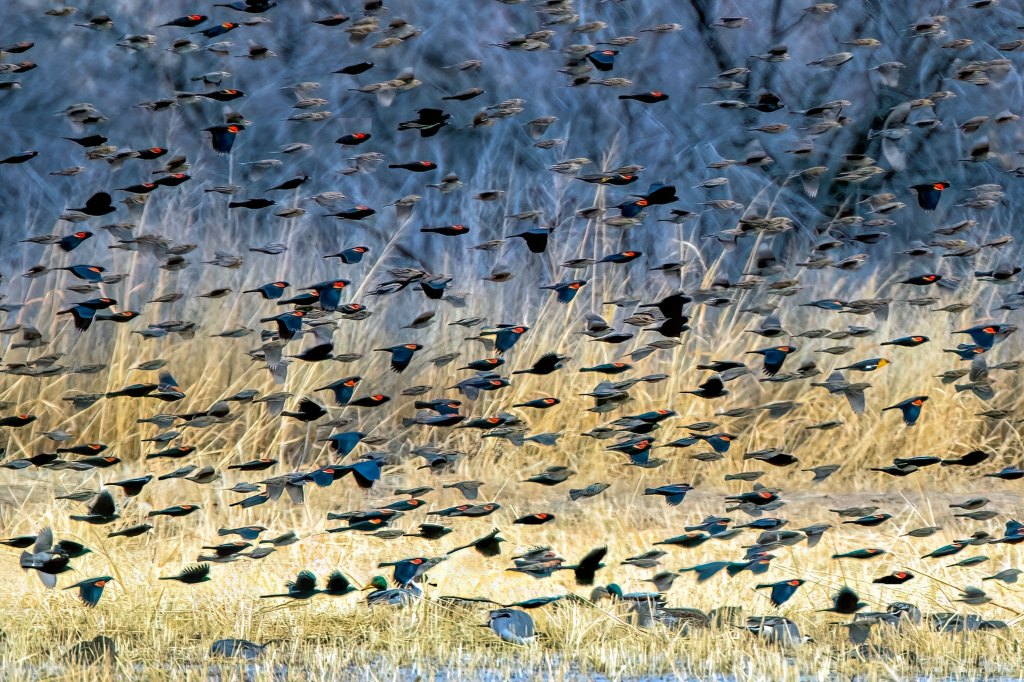
This may look like the start of some kind of bird marathon, and in many ways it is. Wisconsin’s red-winged blackbirds migrate to central and southern states as far as 800 miles away. On the way, they’ll rely on safety in numbers, flying in large flocks that provide a measure of security from predators. Other bird species may join the flock to benefit from their numbers. This image contains just one yellow-headed blackbird. Can you spot it?
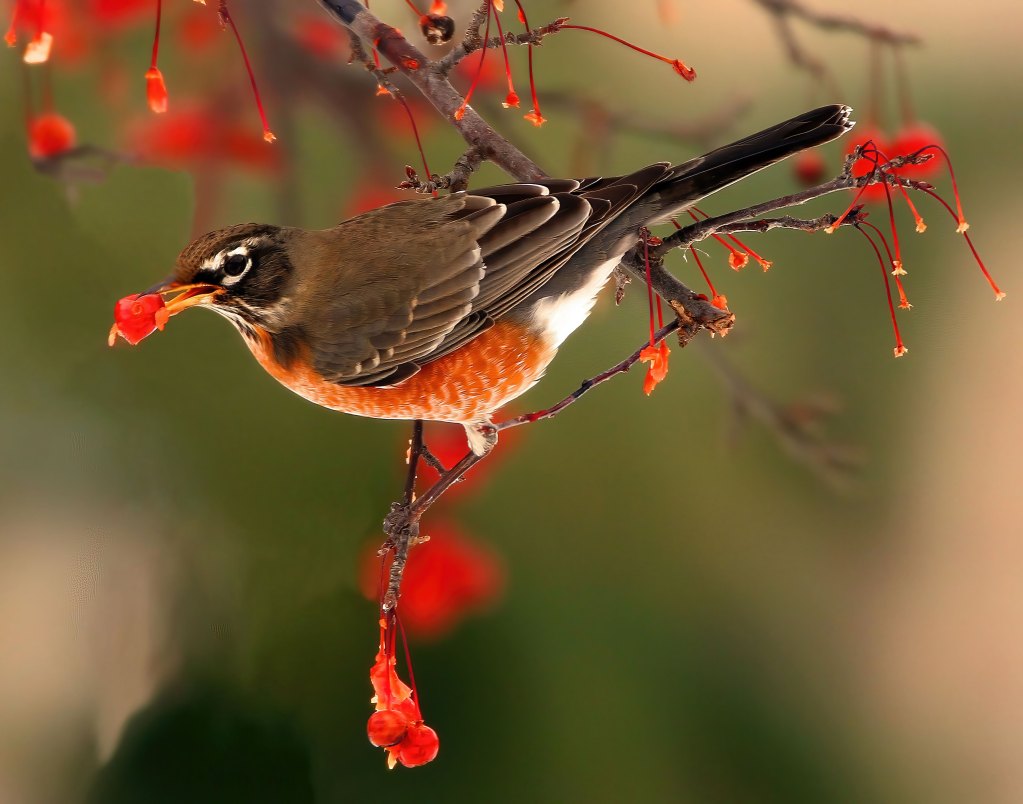
People are surprised to learn that their “first robin of spring” may have spent the winter just a few blocks away. Though many robins fly south for the winter, if they have access to moving water and ample fruit, like crabapples, they often spend the winter in sizable flocks within the many parks that border the Fox River. As food becomes more widely available in spring, robins disperse into neighborhoods to claim breeding territory and residents welcome them back from what actually may have been a very short journey.

About 25% of Wisconsin’s bird species don’t migrate, remaining in the state year round. The list contains many familiar birds such as cardinals, blue jays, chickadees, sparrows, finches woodpeckers and owls. These hardy birds are well adapted to finding food and shelter during Wisconsin’s harsh winter. One such species, the cedar waxwing, becomes nomadic, wandering the state in large flocks in search of fruit and berry trees. Once found, the flock will strip the trees of their fruit in mere days before moving on.


The Navarino Wildlife Area near Shawano acts as an important staging area for migrating sandhill cranes. Each evening, hundreds of cranes pour into the wetlands to roost for the night, drawn to the safety of its shallow water and the security the immense flock provides. Shortly after dawn, the flock will take-off as one, flying to nearby agricultural fields to feed for the day. Staging peaks in October, making this an ideal time to view cranes. By mid-November to early December, the marsh slowly empties of cranes as they journey to their primary wintering grounds in Florida, Alabama, and Tennessee.
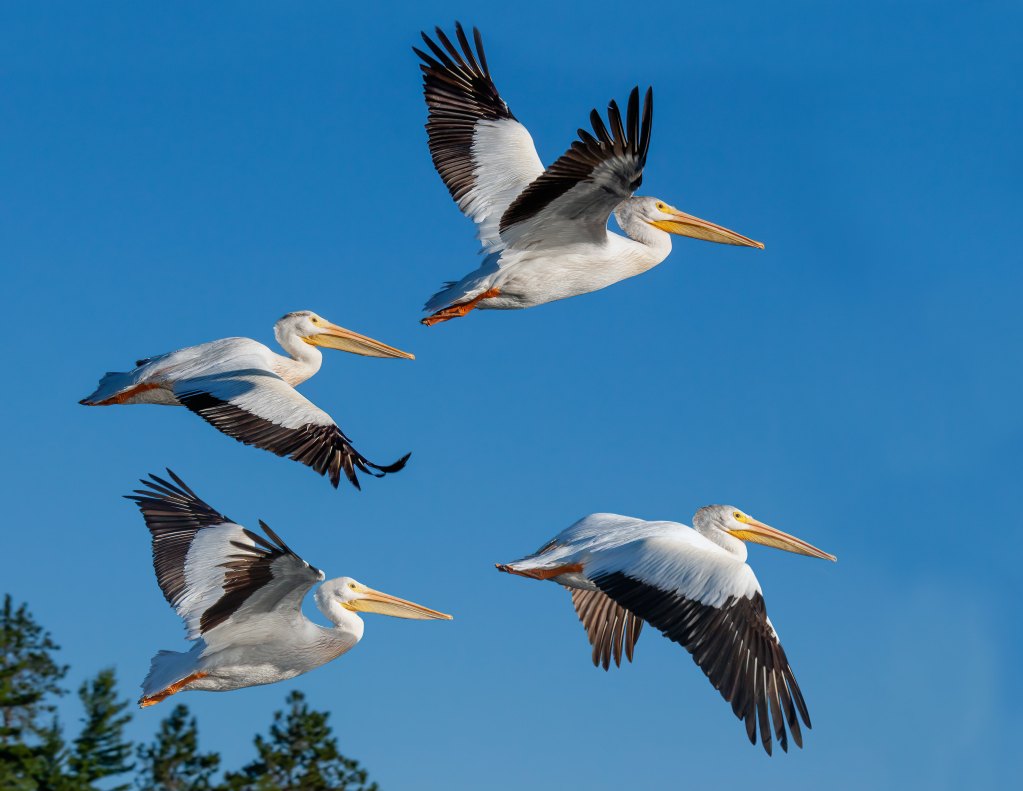
The American white pelican is a true migrant, primarily spending its winters along the Gulf Coast and Mexico. They can often be seen gathering in large flocks on Lake Winnebago before departing the area in late September and October. The birds utilize thermal currents, southerly winds, and their eight-foot wingspans to average 100 miles a day with little effort. Storms or headwinds may briefly ground the birds, providing an opportunity to rest and refuel
before continuing their long journey.


The fall migration provides an opportunity to see unique birds that are just passing through Wisconsin from their homes farther north. Snow geese are a good example. When departing from their breeding territory on the Canadian Arctic tundra, they fly swiftly and at high altitude, mostly passing over Wisconsin without stopping. However, some snow geese take a break from headwinds or bad weather by resting and feeding at the Horicon Marsh and along the Mississippi River corridor in late fall. Because so many northern birds funnel through Wisconsin en route south, spotting rarities is always a possibility and makes fall an exciting time for bird watchers.
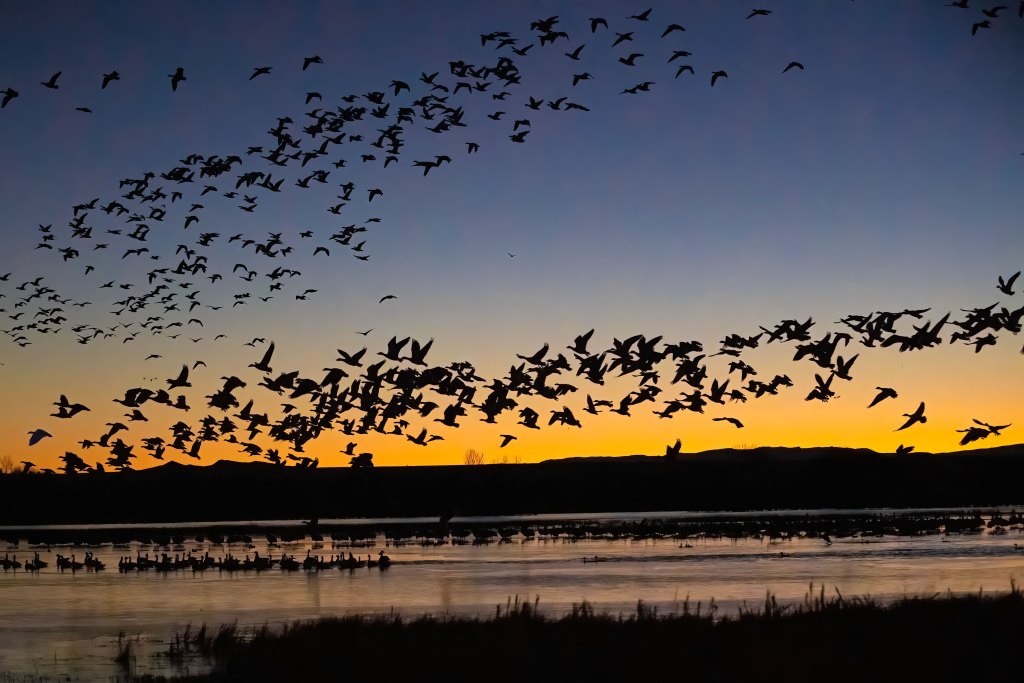
About 35% of all the birds in North America use the Mississippi River flyway when migrating south. This avian superhighway is used by more than 300 species, making it an ideal location to witness the spectacle of migration in fall. Beginning in mid-October, resources like migrationstationusa.com provide up to the minute migration maps showing where waterfowl activity is peaking.
This article was originally published in the October 2025 issue of Appleton Monthly Magazine.