by John Van Den Brandt
Eagle watching is a thrilling experience that brings joy to nature enthusiasts and bird watchers alike. In a state with one of the highest populations of bald eagles in the country, the Fox Valley is considered a particular “hot spot” especially during the winter months when the river freezes and eagles gather near dams and spillways. These areas remain unfrozen, providing a rich hunting ground for eagles that feast on fish in the shallow, rushing water.
The best times to witness these majestic birds are in the early morning or late afternoon, when glowing sunlight enhances their graceful flight and the eagles are most active. Dams, rapids, parks, recreation trails, and boat landings along the Fox River are all likely to yield eagle sightings. Scan the large trees along the shore with binoculars, looking for white spots among the bare branches that might indicate an eagle’s head. Your car serves as a warm blind, allowing closer viewing than the birds might otherwise tolerate. Avoid leaning out the window, as this may cause eagles to fly away, unnecessarily expending valuable energy in frigid temperatures.
The sight of a bald eagle diving and skillfully plucking a fish from the water is a breathtaking spectacle that fills the heart with wonder and appreciation for the natural world. It’s a bucket list experience that many people in other parts of
the country travel far and wide to witness. Fortunately, the hungry eagles of the Fox Valley make the opportunity available to us every day. Here are my top six locations to experience this spectacle yourself. As with all wildlife watching, remember that nature rewards patience and persistence. Take your time and enjoy the show!
1000 Islands Environmental Center, Kaukauna
Sunset Park, Kimberly
The College Avenue Bridge and the Lawe Street to Newberry Trail, Appleton
Lutz Park, Appleton
The Loop the Lake Trail in Neenah/Menasha
Jefferson Park, Menasha


1.
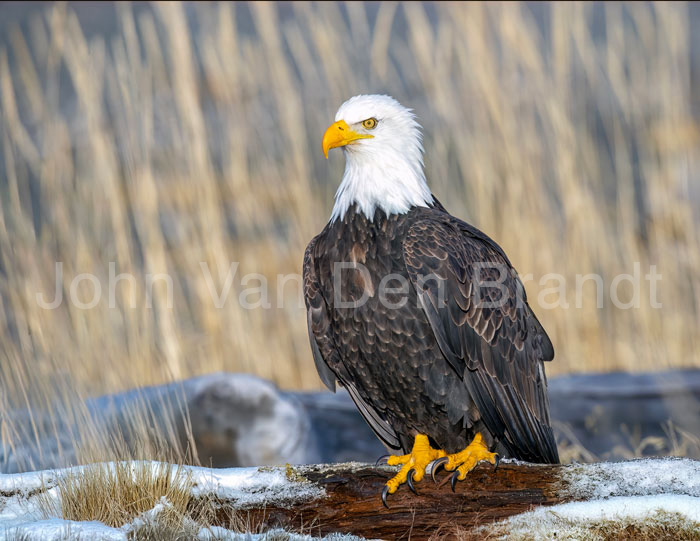
This eagle’s perch reveals the lethal nature of the bird’s talons. Resembling a fistful of fish hooks, each foot’s four razor-sharp, curved claws are well-suited to capturing, killing, and carrying prey in flight. Eagle talons can grow to 2 inches in length and, combined with incredible leg strength, give bald eagles a grip strength of 400 pounds per square inch — about 10 times that of a human hand.
2.
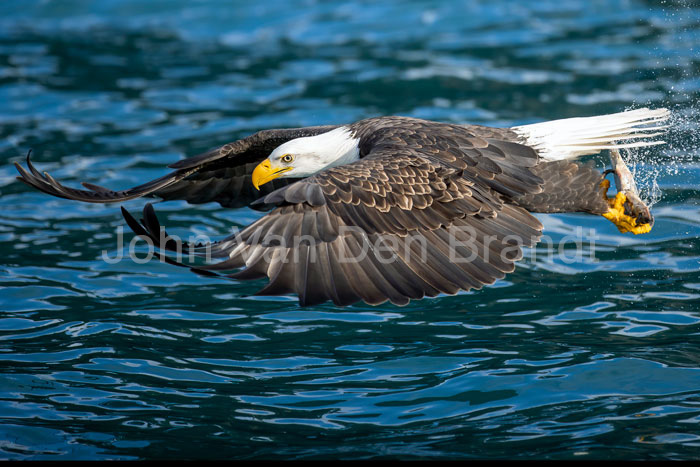
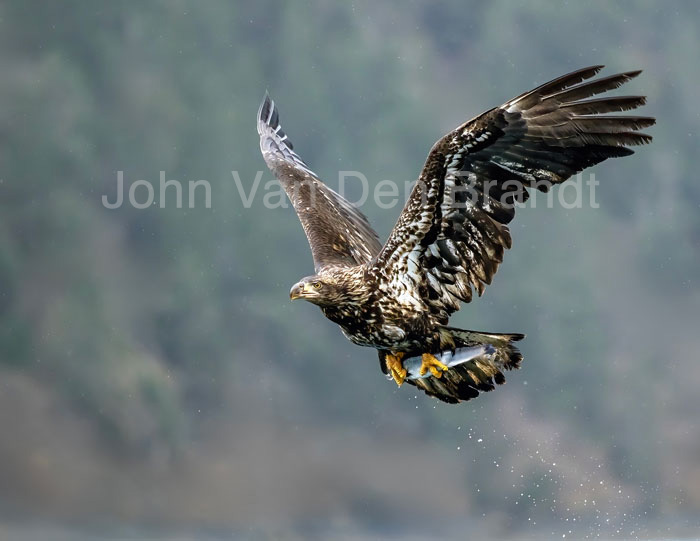
Powerful wings and tremendous grip strength allow bald eagles to comfortably carry prey weighing about 3 to 4 pounds. While tall tales abound of eagles carrying off animals like sheep and large dogs, their maximum carrying capacity in flight is actually around 10 pounds. Occasionally, a bald eagle will capture a fish that is too heavy to lift into the air. Rather than surrendering its prize, it may try to reach shore by awkwardly rowing with its wings.
3.
Bald eagles are remarkably adapted to withstand cold and snowy conditions. Their dense layer of insulating feathers, including a thick down underlayer, helps trap body heat and protect against freezing temperatures. Additionally, eagles have a specialized circulatory system in their legs and feet that allows them to perch on icy branches without frostbite. Their
large, powerful bodies also generate heat efficiently, and they often roost in sheltered areas.
4.
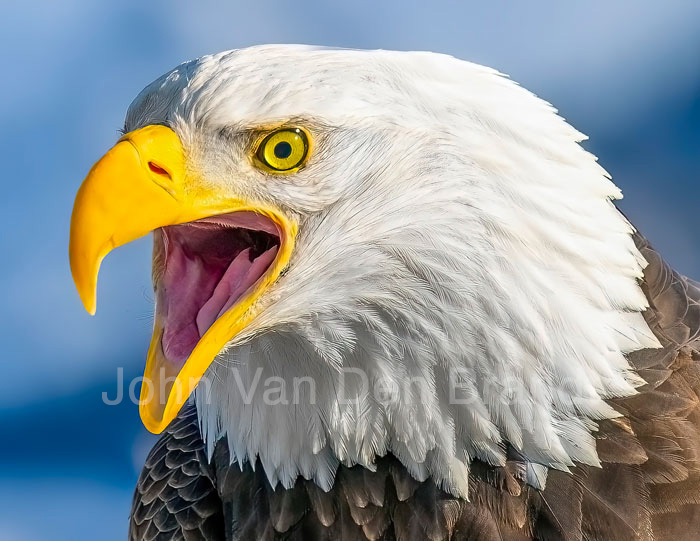
The bald eagle’s beak is an extraordinary tool, perfectly adapted to its role as a predator. Its large, hooked shape allows it to efficiently tear through the flesh of its prey, such as fish and small mammals. The beak’s sharp, curved tip is ideal for gripping and ripping, yet it is also highly sensitive, enabling precise control. This sensitivity allows the eagle to perform delicate tasks, such as gently feeding small bits of food to its young.
5.
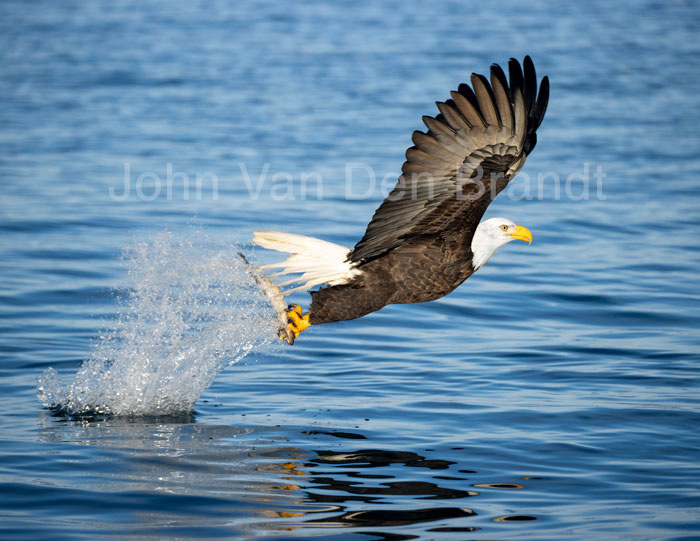
Bald eagles use keen eyesight, powerful flight, and precise technique to catch fish. After spotting fish from high perches or by flying above waterways, they execute a swift, controlled dive. Just before reaching the water, they extend their strong legs and open their talons, skimming the water’s surface, hooking the fish and plucking it from the water with their sharp claws. An eagle’s feet are covered with rough bumps called spicules that help grip the slippery fish.
6.
Immature bald eagles display a distinctive mottled brown-and-white plumage that can make them harder to identify. They won’t develop their iconic white-headed, white-tailed adult appearance until they’re 4 to 5 years old. Observing an immature bald eagle offers a unique glimpse into the growth stages of these magnificent raptors as they develop the keen hunting skills and striking appearance that define adulthood.
7.
The comeback of the bald eagle from the brink of extinction is one of America’s greatest conservation success stories. Bald eagles were on the brink of disappearing in the early 1970s. Legal protections, the banning of DDT, and dedicated conservation efforts led to their rebound. Today, the bald eagle thrives, including Wisconsin’s robust population of about 1,600 breeding pairs. This resurgence demonstrates the power of environmental stewardship and nature’s resilience.
This article was originally published in the February 2026 issue of Appleton Monthly Magazine.